
Alcohol Withdrawal Signs and Symptoms
WHO estimates that approximately 400 million people aged ≥15 years worldwide had an alcohol use disorder in 2019, including about 209 million with alcohol dependence. Alcohol consumption was attributable to approximately 2.6 million deaths globally in 2019.
The withdrawal symptoms of alcohol can occur for those who have developed physiological dependence, usually after prolonged / heavy alcohol use and abruptly cease or significantly reduce drinking alcohol. The body may develop dependence on alcohol over the course of time. When there is rapid fall of alcohol exposure from the body, the brain could be unable to adjust. The result could be a variety of mental and physical symptoms.
Certain symptoms can be mild but others could be grave or dangerous. It is therefore crucial to recognize the warning indications and symptoms of withdrawal symptoms and to know the time to seek professional assistance.
What Is Alcohol Withdrawal?
The withdrawal from alcohol is one of the groups of signs that can develop after stopping or cutting down on the consumption of alcohol. The symptoms can begin within six to twelve hours following the drinking last. It could be physical, emotional or behavioral modifications.
The severity of withdrawal may differ depending on the individual. If you’ve been drinking frequently or developed an addiction to alcohol, you could be at increased risk of serious withdrawal. Chronic alcohol exposure produces neuroadaptation involving increased inhibitory GABAergic effects and compensatory excitatory/glutamatergic activity; abrupt reduction leaves the CNS temporarily hyperexcitable.
Common Signs of Alcohol Withdrawal
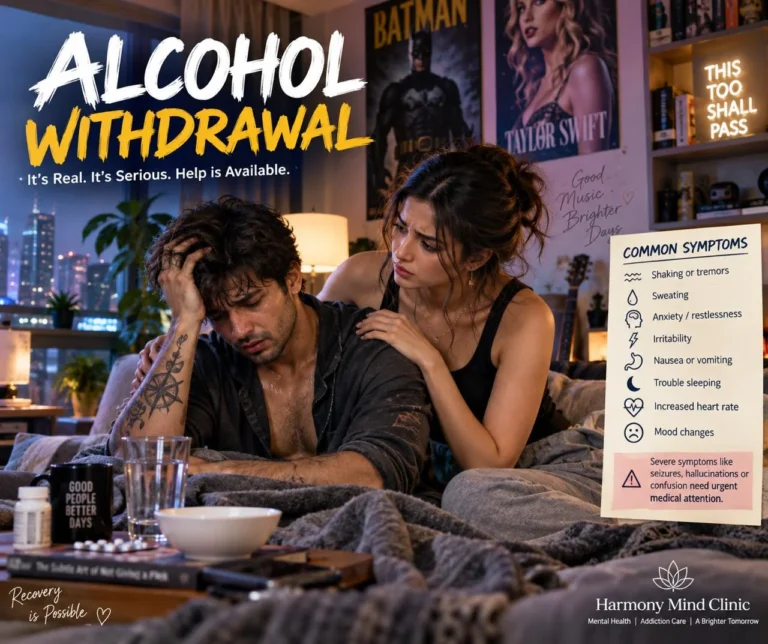
Early signs can be like the flu or an intense period of tension. The most common symptoms are:
- Shaking
- Sweating
- Headache
- Irritability
- Restlessness
- Trouble sleeping
- Heart rate increases
- The mood changes
- Nausea, Vomiting.
- Increased BP.
- Reduced concentration.
Psychological Symptoms
It’s not only about how alcohol withdrawal can cause physical harm. It may also impact people’s emotions and thoughts.
One may be extremely nervous, restless or anxious. It may be difficult to fall asleep or focus.
Sometimes withdrawal may also trigger hallucinations.
Severe Alcohol Withdrawal Symptoms
A severe withdrawal could be risky. The potential complications could include seizures, extreme hallucinations, confusion, excessive body temperature and severe hyperagitation. A serious issue is called delirium tremens (DTs). It may cause the appearance of confusion, shaking and high fever, and rapid heartbeat, marked autonomic hyperactivity as well as hallucinations. DTs usually begin on the third or second day following withdrawal, but the timing of onset can differ.
Among people experiencing active alcohol withdrawal syndrome, withdrawal seizures occur in approximately 5–10% in some clinical cohorts, while delirium tremens occurs in roughly 3–5% of patients hospitalized with alcohol withdrawal syndrome.
How Long Does Alcohol Withdrawal Last?
In the beginning, withdrawal symptoms could begin days after drinking the last alcoholic drink. A lot of symptoms become more intense in the initial few days. The signs usually fade after several days. However, the precise duration is dependent upon factors like the level of dependence on alcohol and general well-being.
When Should You Seek Help?
Do not ignore withdrawal signs. If someone is experiencing intense shaking, seizures, extreme confusion, hallucinations or extreme anxiety, seek urgent medical attention.
If you drink regularly and would like to quit, then talk to a psychiatrist before abruptly stopping. The assistance of a doctor can lessen the dangers associated with withdrawal.
Get Professional Support for Alcohol Addiction
It can be very hard to deal with on its own. A professional support system can assist people in recognize their drinking habits and managing withdrawal in a safe manner and moving towards the long-term goal of recovery.
Harmony Mind Clinic provides mental health and addiction solutions, which include assistance to those suffering from alcohol addiction. Its method includes an individual evaluation and treatment, as well as ongoing care.
The need for help isn’t an indicator of weakness. This can be a vital start to bettering your overall mental and physical well-being.
Dr Mauni Nagda
Co-Founder
Harmony Mind Clinic
References:
1. World Health Organization. Global Status Report on Alcohol and Health and Treatment of Substance Use Disorders. Geneva: World Health Organization; 2024.
2. Jesse S, Bråthen G, Ferrara M, et al. Alcohol withdrawal syndrome: mechanisms, manifestations, and management. Acta Neurol Scand. 2017;135(1):4-16.
doi:10.1111/ane.12671. PMID: 27586815.
3. American Society of Addiction Medicine (ASAM). The ASAM Clinical Practice Guideline on Alcohol Withdrawal Management. J Addict Med. 2020;14(3S Suppl 1):1-72.
doi:10.1097/ADM.0000000000000668.
Reach out today.
📍 19th Floor, Panchratna Building, 1908 A, near Opera House, Charni Road, Opera House, Girgaon, Mumbai, Maharashtra 400004
📞 Call us at 9326652219
🌐 Visit harmonymindclinic.com


